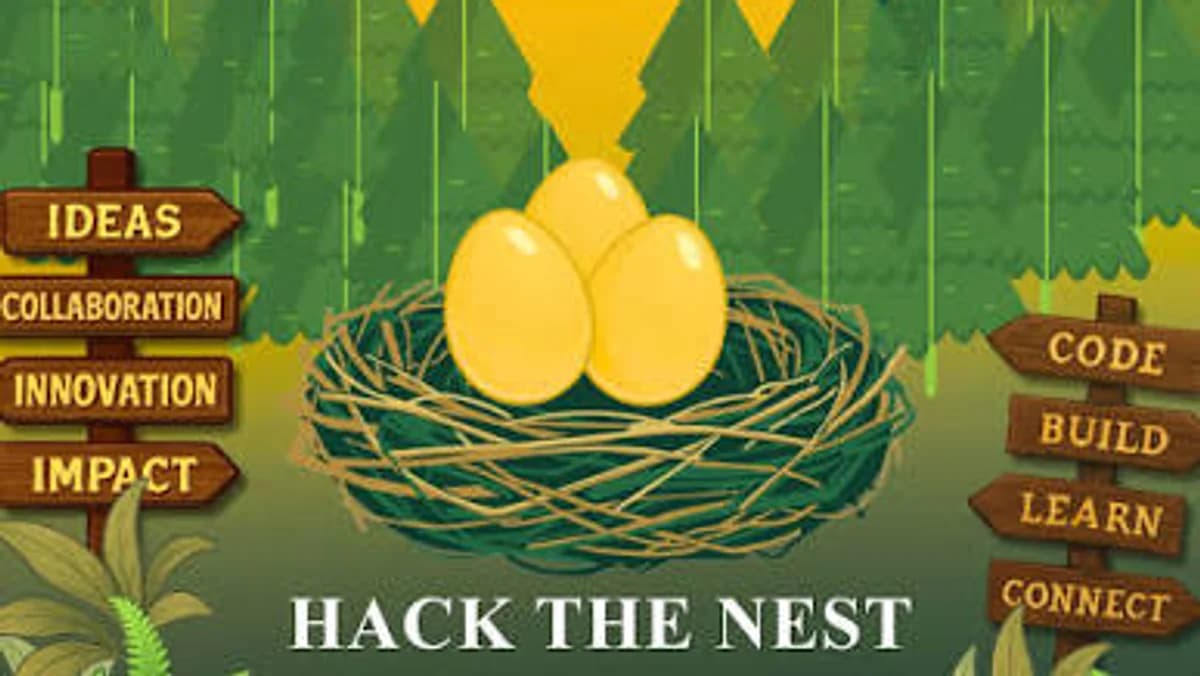
Last weekend, Quantum Rings sponsored Hack The Nest, the first student-led flagship hackathon at Eastern Michigan University. Hosted by Google Developer Group on Campus at EMU on November 14–15, the 24-hour event brought high school and college students to Ypsilanti to build projects across tracks ranging from AI to brain-computer interfaces to quantum computing.
We led the event's Quantum Leap track alongside Xanadu, with a simple prompt: your laptop is a quantum computer now. Prove it.
Supporting Hackers from Afar
We joined Hack The Nest remotely this year. Our Director of Operations, Omar Armbruster, gave a demo walking participants through the Quantum Rings SDK and the Open Quantum platform.
Over the weekend, Omar worked virtually with some of the students on their projects and then helped judge the final submissions.
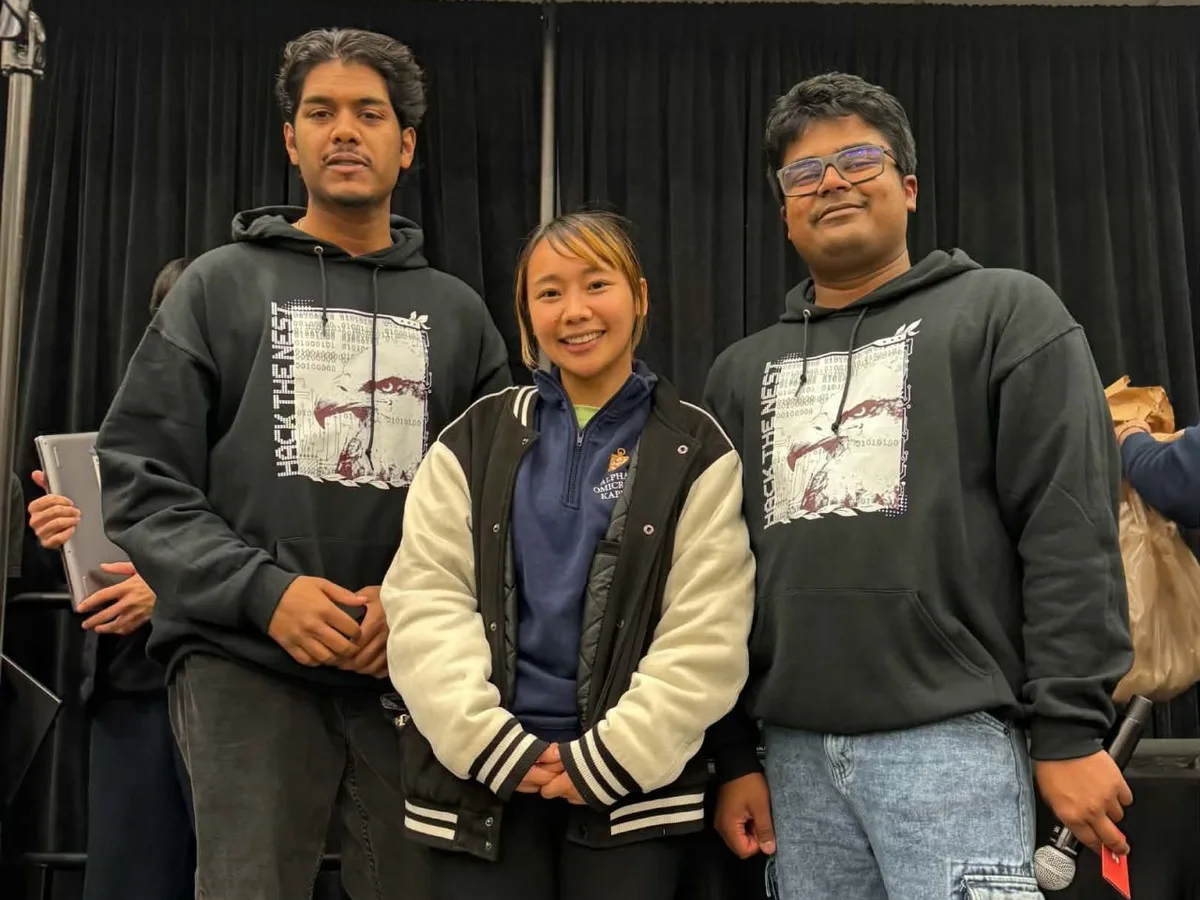
Congratulations to Adrianna Pedron
A huge congratulations to Adrianna Pedron, a software engineering student at Oakland Community College, for winning the Quantum Leap track with her project EVolt Lab!
EVolt Lab is a learning tool for anyone thinking about switching to an electric vehicle. Users design an EV battery step by step, choosing the electrolyte, electrode thickness, battery size, and even the outside temperature (starting from live Detroit weather), and see how their choices affect range, fast-charge time, and winter performance. An AI voice guide, Volt, explains every number in plain language.
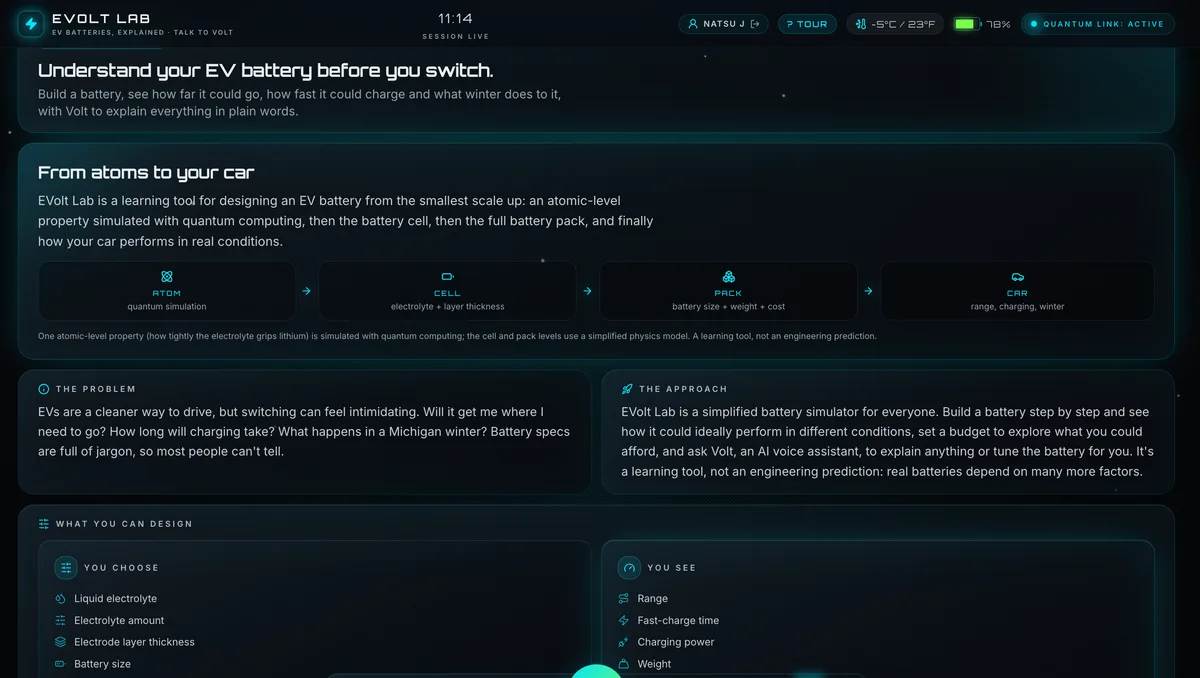
The quantum computing sits at the very bottom of that stack. To find out how tightly each electrolyte holds on to lithium, which affects how fast a battery charges, Adrianna ran a Variational Quantum Eigensolver (VQE) on the Quantum Rings simulator. She completed 53 VQE calculations and checked every result against the exact classical answer, and every battery-molecule energy landed within chemical accuracy. Those results feed directly into the app's charging model.
What stood out to us was how carefully the project was built. Adrianna kept her quantum model small on purpose so every result could be verified, was upfront that it makes no claim of quantum advantage, and still made the case for why the same approach could matter once hardware catches up. Turning that into something a non-expert can play with in a browser is a great piece of work for 24 hours. You can read more on the project's Devpost page.
As the Quantum Leap winner, Adrianna receives compute credits and a guaranteed interview for our internship program.
Thank You, Hack The Nest
Thank you to everyone who participated, and to the more than 20 EMU students on the organizing team, led by founder Chanuth Jayatissa and co-leads Salma Ibrahim and Melvin Karupati, for pulling off such a strong first year.
Header image from the Hack The Nest event poster. Other images courtesy of Adrianna Pedron.
Stay Updated
SDK updates, webinars, and quantum industry news — straight to your inbox.