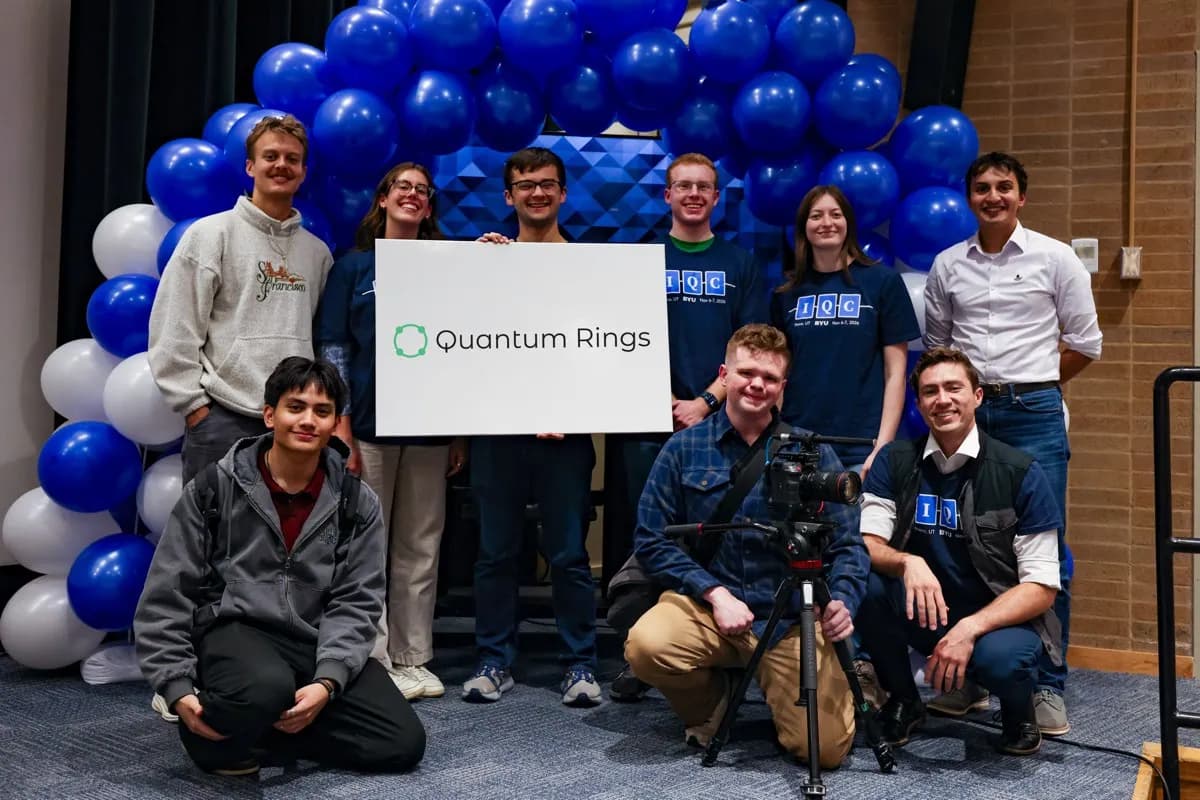
Last week, Quantum Rings headed to Provo, Utah, for the first-ever Intermountain Quantum Competition (IQC), a new quantum hackathon hosted at Brigham Young University on November 6–7. Over the event, 63 hackers on 15 teams worked through four main challenges written by industry sponsors, and we were proud to provide one of them.
Our Director of Operations, Omar Armbruster, was on site for both days, presenting our challenge, mentoring teams, judging final submissions, and joining the event's industry panel. Here's a look at how it went.
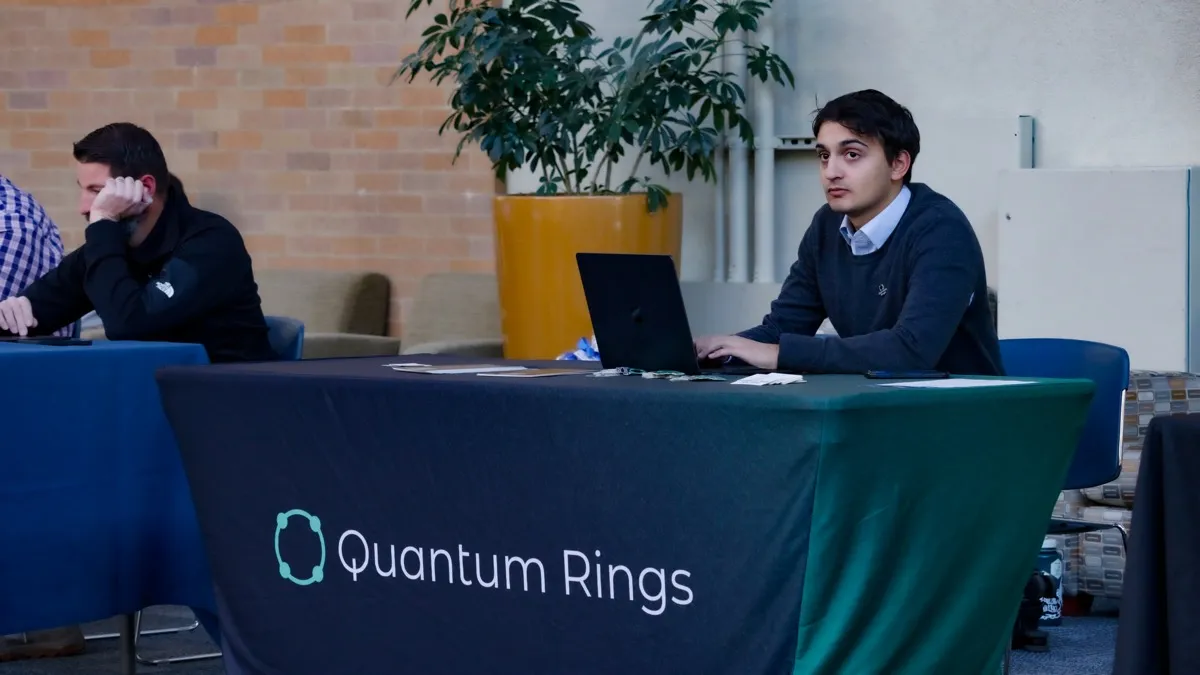
The Quantum Rings Challenge
Building on our challenges at MIT iQuHACK 2026 and SC Quantathon v3, we asked teams to tackle a problem we care deeply about: predicting how long a quantum circuit will take to run on the Quantum Rings simulator, without actually running it.
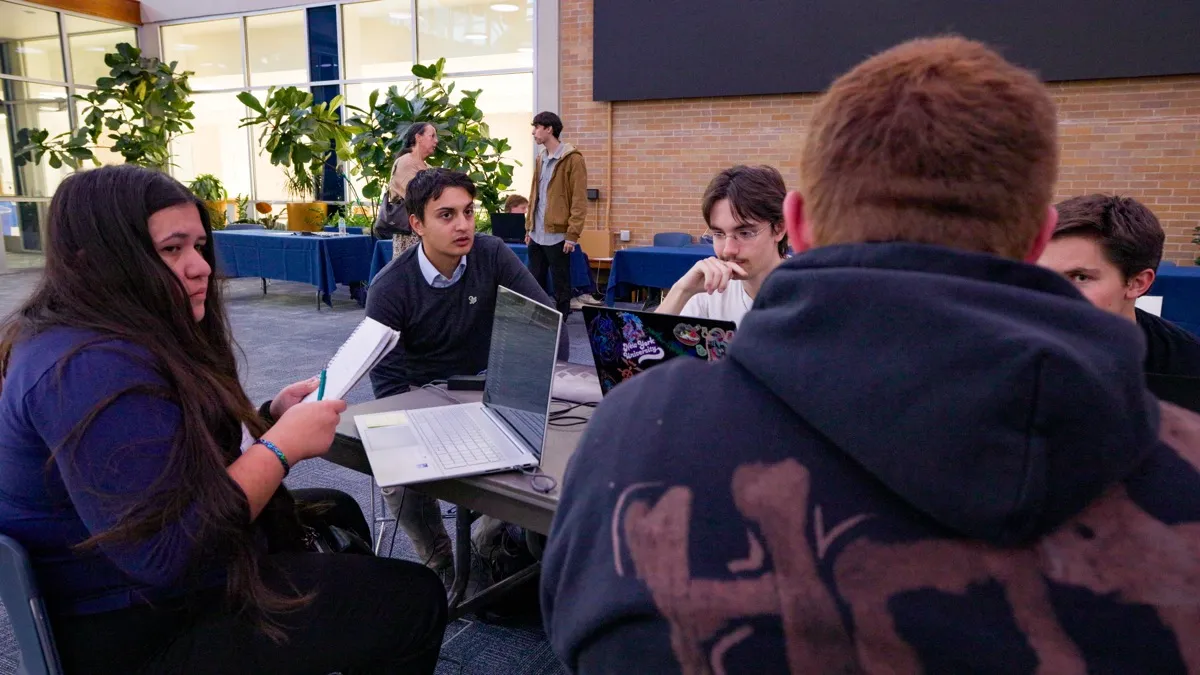
Accurately estimating runtime from circuit structure alone is a key piece of bringing simulation to Open Quantum, where users need to know how long a job will run and what it will cost before they submit it. Four teams took on our track, and each brought a different angle to the problem. The best models were comparable to our own internal models, which is impressive work for a hackathon.
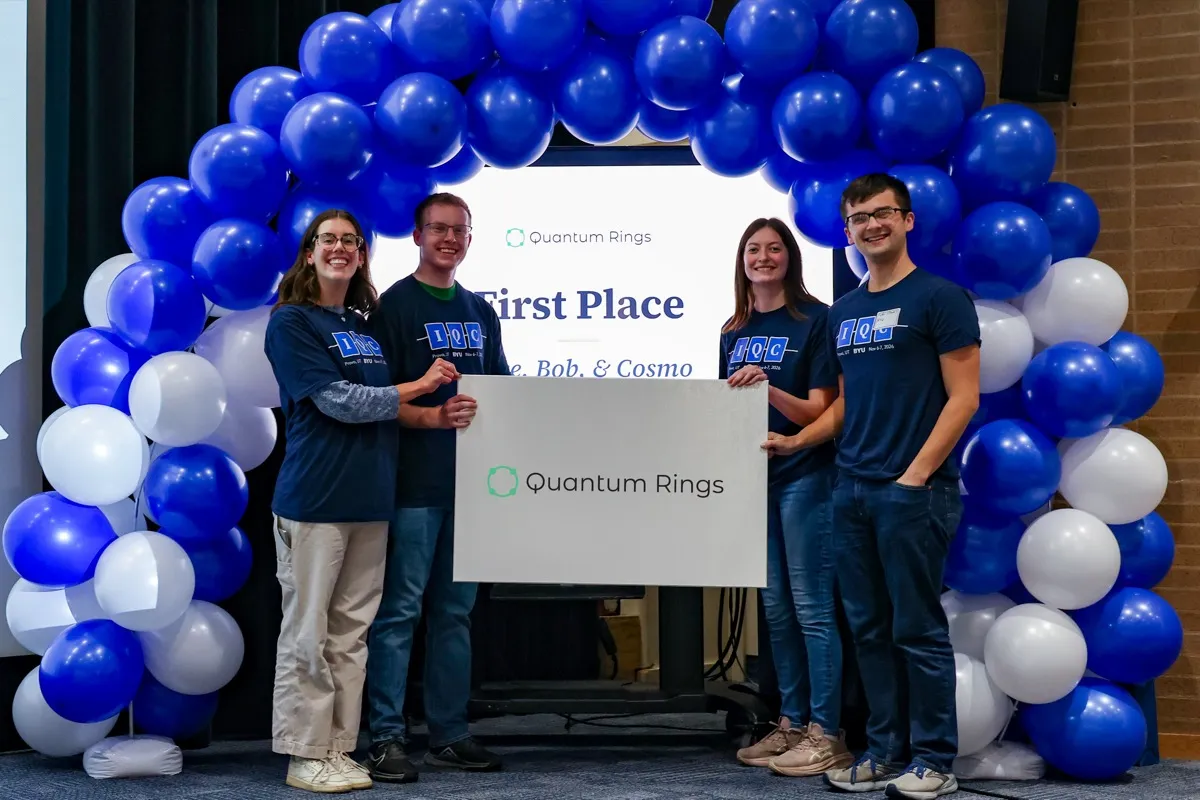
Congratulations to Team Alice, Bob, and Cosmo
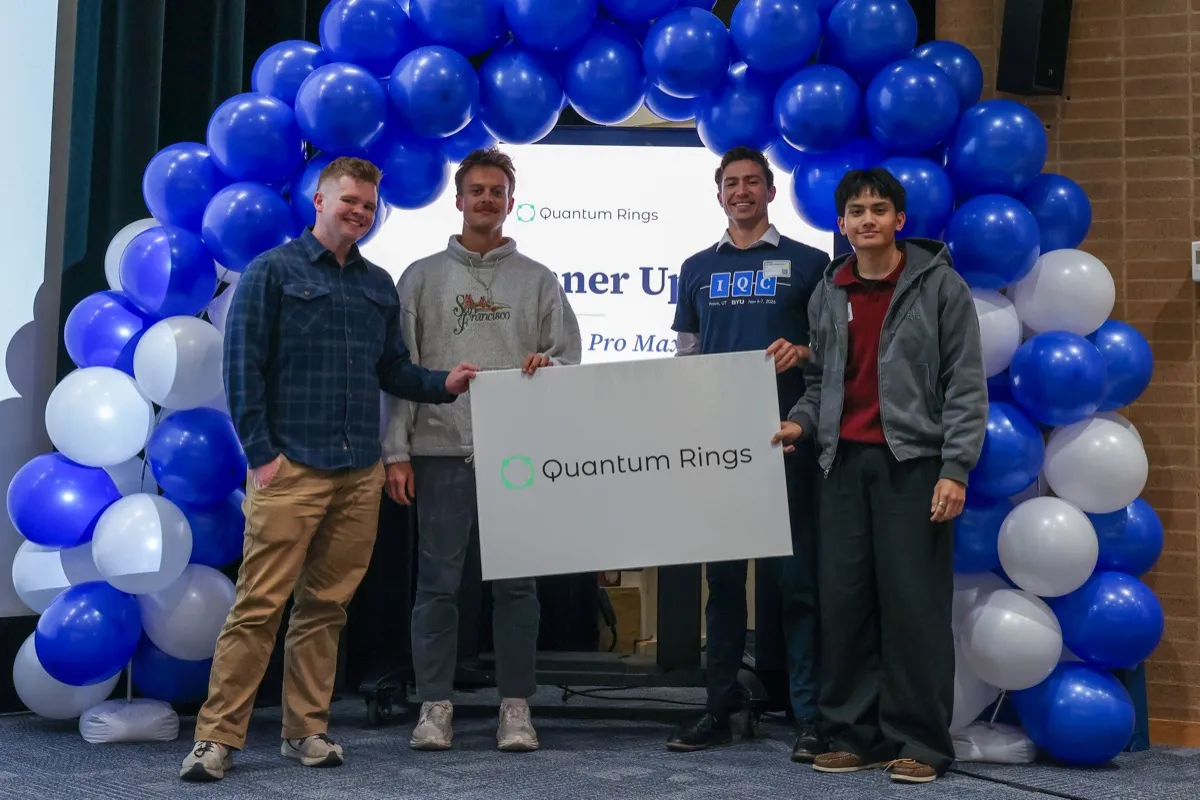
A huge congratulations to Amelia Angell, Emma Esplin, Tyler Stowell, and Matthew Gatherum of Team Alice, Bob, and Cosmo for winning the Quantum Rings Challenge! The team stood out on two fronts: they achieved the highest accuracy on our runtime prediction challenge and produced the most novel approach to the problem.
The MPS Probe
The team started from a key insight: a circuit's runtime on our simulator depends far less on how many gates or qubits it has than on how much entanglement it builds along the way. The catch is that the only reliable way to measure that entanglement is to simulate the circuit, which is exactly what the challenge asks you not to do.
Their answer was the MPS Probe. In the team's words, they ran "a really bad tensor network" on purpose: a tiny matrix product state simulation at a very low bond dimension. The probe doesn't try to get the right answer. Instead, it watches how quickly entanglement grows across each cut between neighboring qubits as the circuit progresses, and that's a signal circuit structure alone can't reveal. It also takes shortcuts wherever the result stays exact, which lets it get much further through wide circuits within the time limit.
The team combined the probe with a structural entanglement estimate and a physics-informed runtime formula, then trained tree-based models to correct whatever that formula missed. Using a cheap, deliberately approximate simulation to predict the cost of the real one is a genuinely creative idea, and it's the kind of thinking we love to see. Outstanding work!
As winners of the Quantum Rings Challenge, each team member receives $200 in Open Quantum credits, a feature on our social media, and a guaranteed interview for our 2027 summer internship program.
Congratulations as well to runner-up QuantumPods Pro Max Ultra for a strong showing in our track!
Open Quantum in the Hands of Hackers
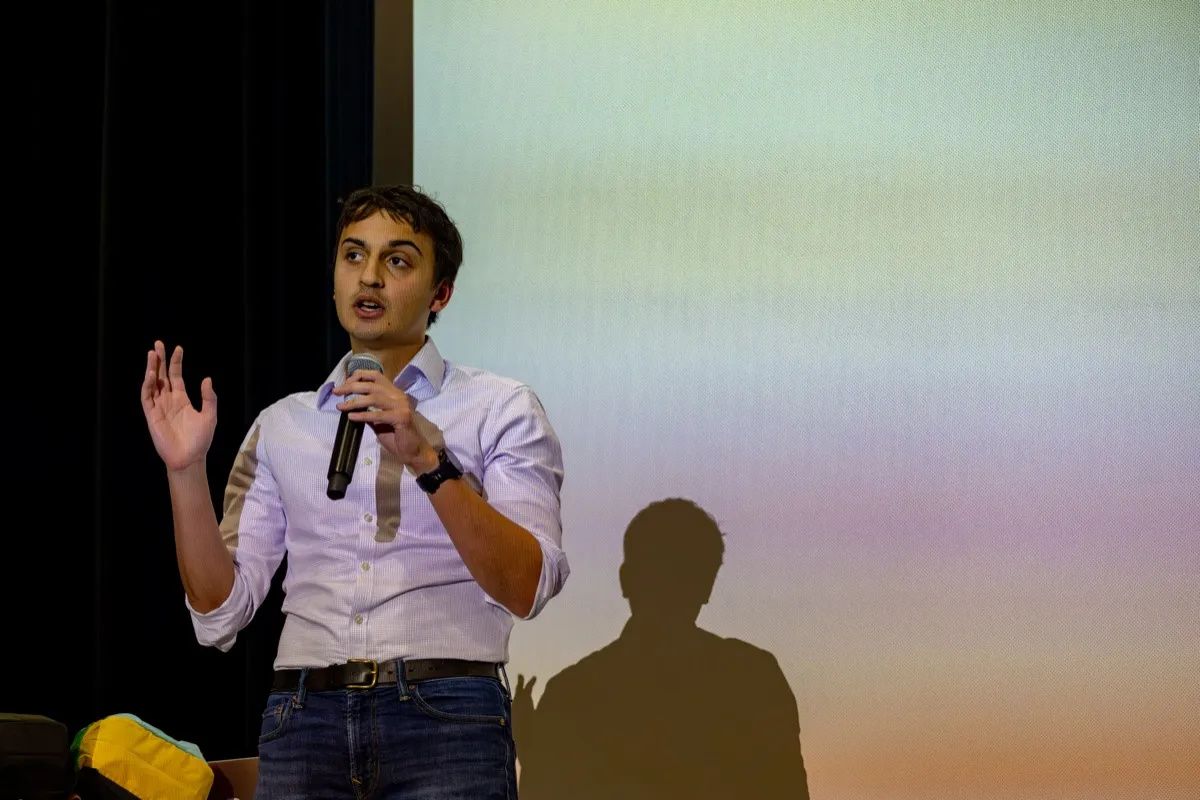
During the pre-competition program, Omar gave a talk introducing Quantum Rings, with an overview of the business and a live demo of Open Quantum. Participants then had the chance to try the platform for themselves.
One of the highlights of the event was seeing how far that went beyond our own track:
- One team used Open Quantum to run its QAOA algorithm on real quantum hardware.
- Another team relied extensively on the Quantum Rings simulator through Open Quantum.
- Even the event raffle was drawn using a quantum random number generator run on Open Quantum.
The Faces of Quantum
The centerpiece of Friday's pre-competition program was The Faces of Quantum, an industry panel moderated by IQC Co-Director Will Ott. The panel brought together people working on very different parts of the field, from academic research and hardware to simulation and real-world applications, to show students how the pieces of quantum computing fit together. Omar joined:
- Alexey Galda, Scientific Director, Moderna
- Claudio Girotto, Sr. Manager, Solutions PM, IonQ
- Jean-Francois Van Huele, Associate Professor, BYU Physics and Astronomy
- Ryan Camacho, Associate Professor, BYU Physics and Astronomy, and the Nucleus Institute
- Justin Fife, Director of Engineering, Vasion
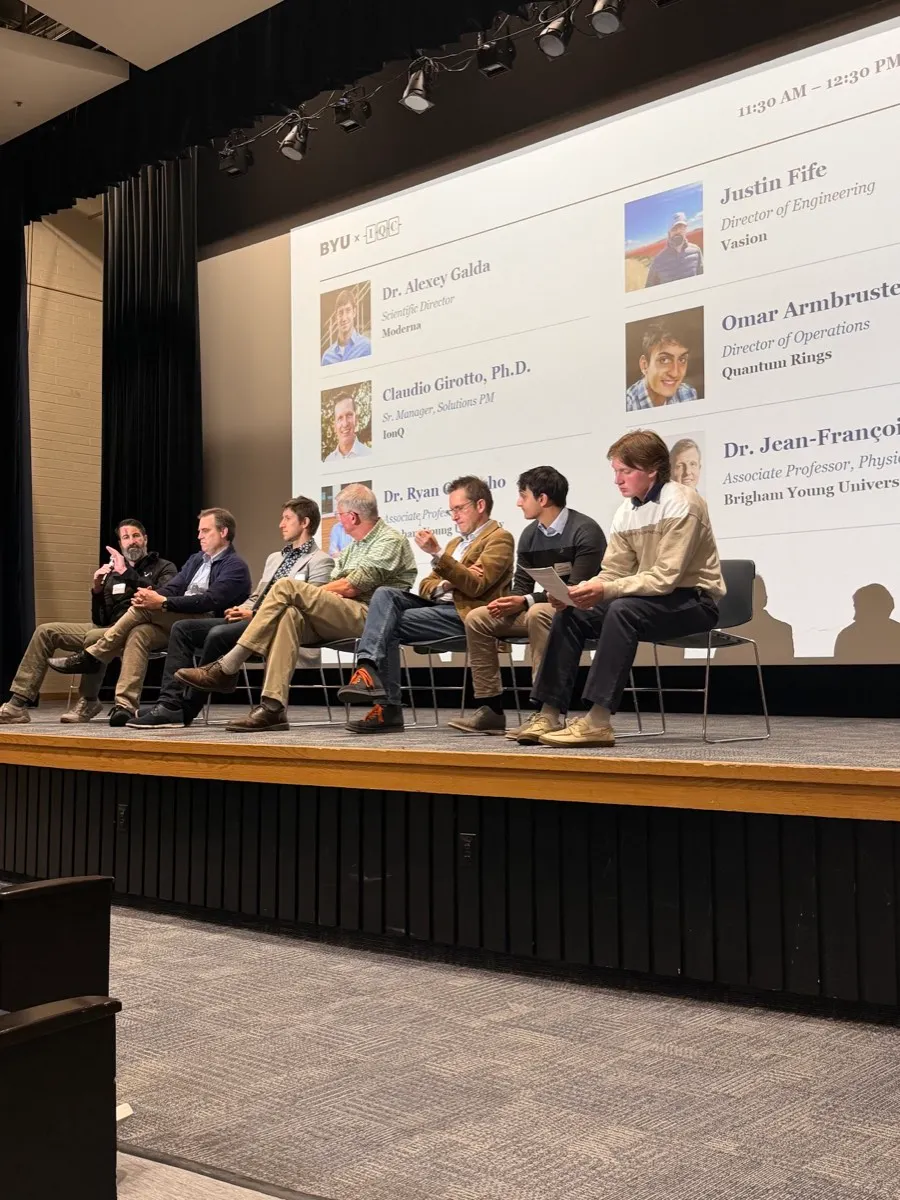
With an audience made up largely of people new to quantum, the panel covered a lot of ground: elevator pitches for quantum computing, the most common myths, the biggest challenges facing the field, what quantum means for encryption, and advice for students looking to break in.
One of the most engaging discussions came from a question suggested by Alexey: how do we tell genuinely promising quantum applications apart from hype? The panel explored why companies engage in hype in the first place and how to see through it, and closed with a question worth thinking about: would companies even tell us if they did achieve quantum advantage?
Thank You, IQC
Thank you to everyone who participated, and to our fellow sponsors Vasion, Nasdaq, JustBuild, qBraid, and Classiq for helping make it such an exciting event.
A special thank you to organizers Will Ott, Kai Sandberg, Allie Sensinger, Heather Cook, Chandler Saenz, Jonas Goodrich, Ryan Camacho, and Jean-Francois Van Huele for making this event so special. It was a fantastic first year, and we're already looking forward to next year!
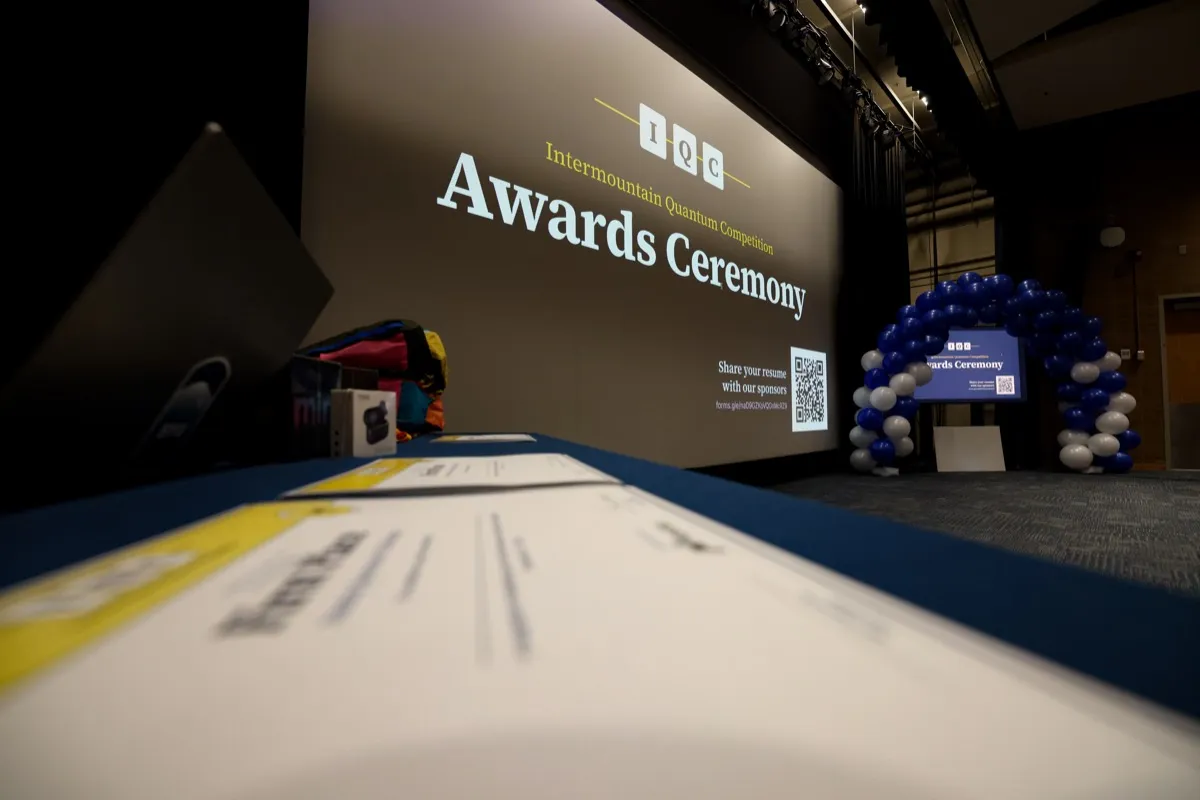
Photos courtesy of Josh Aldridge, BYU Physics and Astronomy.
Stay Updated
SDK updates, webinars, and quantum industry news — straight to your inbox.